Tuesday, October 11, 2011

4 vs 1

Friday's game ("A Not-so-Simple 'Simple Endgame'") was intense, with significant analysis; so today I thought I'd lighten up and present a more straight-forward game. Not "better played", just "less analyzed."

The jist of the game is that three "Jerome pawns" offset the enemy piece, while four "Jerome pawns" win against it.

perrypawnpusher - NewValues
blitz, FICS, 2011

1.e4 e5 2.Nf3 Nc6 3.Bc4 h6

The Semi-Italian Opening.

4.0-0

Played by habit. I have been meaning to explore the alternative 4.Nc3, although I probably would have wound up in the game continuation, any way, if my opponent had played 4...Nf6 (followed by 5...Bc5). 

4...Nf6 5.Nc3 Bc5

The Semi-Italian Four Knights Game.

6.Bxf7+

The Semi-Italian Four Knights Jerome Gambit (by transposition from the Jerome: 1.e4 e5 2.Nf3 Nc6 3.Bc3 Bc5 4.Bxf7+ Kxf7 5.Nc3 Nf6 6.0-0 h6).

6...Kxf7 7.Nxe5+ Nxe5 8.d4 Neg4


I was surprised to see that The Database contained only one earlier example of this move.

9.dxc5 Qe7

I saw 9...Re8 in perrypawnpusher - GiantReign, blitz, FICS, 2010 (1-0, 20) The text is an improvement.  

10.Qd4 d6 11.cxd6 cxd6 12.h3

After the game, Houdini suggested 12.f4 right away.

12...Ne5 13.f4 Ng6


What is "unusual" in this otherwise routine position is the isolated Black pawn at d6. That suggests that one plan of development for White would be b2-b3 followed by Bc1-a3. Even if further analysis showed that the pin on the pawn was not dangerous, White could play Bc1-b2, putting the Bishop on the a1-h8 diagonal.

14.Bd2 Rg8

This is most likely a mouse-slip, as the move is incomprehensible, while 14...Rf8, 14...Re8 and 14...Rd8 would all make sense. My opponent did not request a take-back (which I probably would have given) so I can not be sure of this.

15.Rae1 Qd7 16.Nd5 Nh5


I know that the "Jerome pawns" are beginning to look frisky, but this horsing around does not help Black. 

17.Bc3 b6 18.g4 Nf6


19.Nxf6 gxf6 20.Qxf6+ Ke8 21.f5 Ne5 22.Bxe5 dxe5 23.Qxe5+ Qe7

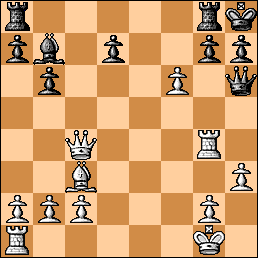
White's lead in development has led to the win of two pawns, which meant that I had 4 pawns against Black's Bishop, enough for a winning endgame advantage. It would actually have been stronger for me to leave the Queens on the board, but my time was low (and had been so for a while) and I figured that I was more likely to overlook an enemy attack with Queens on the board.

24.Qxe7+ Kxe7 25.e5 h5 26.Rf4 Bb7 27.Rd1 Ba6 28.Kf2 hxg4 29.hxg4 Rh8

Black finds no answer for White's three connected, passed pawns.

30.Ke3

More sense was to be found in 30.Kg3.

30...Bb5 31.g5 Bc6 32.g6 Raf8 33.Rd6


33...Rh3+ 34.Kd4 Bb7 35.f6+ Ke8 36.g7 Black resigned


Monday, October 10, 2011

Recurring Theme

Here is another short Jerome Gambit game from Bill Wall. It contains a motif that has showed up in recent posts – that of Ng5+ with an attack on Black's King as well as on a piece at e6 (see "Sunday Tournament Update" and "Ng5+") – and comes with a reminder that snap defensive moves can have long term consequences.

Bill has utilized the Qe2 attack before ("No Getting Around This Wall" is particularly interesting), so, for study purposes, I have included earlier games of his, even when he has played the move sooner than in the text. I have also included a number of games by hinders, of FICS, who played the line (with mixed success) a while back.

Wall,B - DDRM
FICS, 2011

1.e4 e5 2.Nf3 Nc6 3.Bc4 Nf6 4.Nc3 Bc5


The Italian Four Knights Game.

5.Bxf7+

The Italian Four  Knights Jerome Gambit.

5...Kxf7 6.0-0

Instead: 6.Qe2 d6

a) 6...Rf8 7.Qc4+ d5 (7...Ke8 8.Qxc5 d6 9.Qe3 Be6 10.d3 Kf7 11.Ng5+ Ke7 12.Bd2 Qd7 13.0-0 h6 14.Nxe6 Qxe6 15.f4 Ng4 16.Qg3 h5 17.h3 Nf6 18.fxe5 dxe5 19.Nd5+ Nxd5 20.exd5 Qxd5 21.Qxg7+ Kd6 22.Rxf8 Black resigned, Wall, B-Hamilton, E, FICS, 2011) 8.Qxc5 d4 9.Nb5 Nxe4 10.Nxe5+ Nxe5 11.Qxe5 Ng3 12.fxg3 Re8 13.0-0+ Kg8 14.Qxc7 Qg5 15.Qf7+ Black resigned, Wall, B-NFNZ, FICS, 2011;

b) 6...d5 7.Nxd5 Nxd5 8.Qc4 Qd6 9.exd5 Nd4 10.Nxd4 exd4 11.0-0 b5 12.Qb3 Re8 13.Qf3+ Kg8 14.d3 Bb7 15.a4 b4 16.Qg4 Qxd5 17.Bf4 Re2 18.Bh6 Qxg2+ 19.Qxg2 Bxg2 20.Kxg2 gxh6 21.Rac1 Rf8 22.b3 Bd6 23.h3 Kg7 24.a5 Rf5 25.a6 Bf4 White resigned, Wall,B-Samvazpr, Chess.com, 2010;

7.0-0 h6 8.h3 Rf8 9.d3 Nd4 10.Nxd4 Bxd4 11.Nb5 Bd7 12.Nxd4 exd4 13.f4 Kg8 14.Qe1 Qe7 15.Qb4 Bc6 16.Qxd4 Qf7 17.Bd2 Qg6 18.f5 Qe8 19.Bc3 Rf7 20.Rf3 Nd7 21.Rg3 Ne5 22.Rf1 Qe7 23.Qe3 Kh8 24.f6 Rxf6 25.Rxf6 Qxf6 26.d4 Nc4 27.d5 Qh4 28.Bxg7+ Kh7 29.Qd3 Black resigned, Wall,B - Darkmoonstone, FICS, 2011.

6...d6 7.Qe2

7...Bg4

Or 7...Ke8 8.Qc4 Rf8 9.d3 Qd7 10.d4 exd4 11.Nb5 Bb6 12.Na3 Qe6 13.Qd3 Bd7 14.c3 Ne5 15.Ng5 Nxd3 16.Nxe6 Bxe6 17.Bd2 Nxb2 18.cxd4 Bxd4 19.Nb5 Bb6 20.a4 a5 21.Nc3 Nc4 22.Rab1 Nxd2 23.e5 dxe5 24.Nb5 Nxf1 25.Rxf1 Ng4 26.h3 Bc4 27.Nc3 Bxf1 White resigned, hinders - Lukino, FICS, 2001;


Or 7...Rf8 8.Qc4+ Be6 9.Ng5+ Ke7 (9...Kg6 10.Qxe6 Kxg5 11.d4+ Kg6 12.dxc5 Nd4 13.Qh3 dxc5 14.Qg3+ Kf7 15.Qxe5 Re8 16.Nb5 b6 17.Qg3 Ne2+ White resigned, hinders-Lader, FICS, 2000) 10.Qxe6 checkmate, hinders - Devotion, FICS, 2001;


Or 7...Nd4 8.Qc4+ Be6 9.Ng5+ Ke7 10.Na4 Bxc4 11.d3 Nxc2 12.Rb1 Bxd3 13.Nc3 Nd4 14.Ra1 Bxf1 15.Be3 Nc2 16.Rc1 Bd3 17.Nd5+ Nxd5 18.exd5 Bxe3 19.fxe3 Nxe3 20.Re1 Nxd5 21.Rd1 Bc4 22.b3 Nc3 23.Re1 Bb5 24.a4 Ba6 25.b4 Nxa4 26.Ra1 Nb6 27.Rb1 Kd7 28.Ne4 Nc4 29.b5 Bxb5 30.Rxb5 Qh4 31.h3 Qxe4 32.Rxb7 Qe1+ 33.Kh2 Ne3 34.Rb3 Rhf8 35.Rc3 Rf5 36.Ra3 Rg5 37.Rxe3 Qxe3 38.Kh1 Qg3 39.Kg1 Qxg2 checkmate, hinders - putoamo, FICS, 2001;


Or 7...Be6 8.Ng5+ Ke7 9.a3 h6 10.b4 Bd4 11.Nf3 Rf8 12.Nb5 Bxa1 13.Nh4 Bd4 14.Ng6+ Ke8 15.Nxf8 Kxf8 16.c3 Bb6 17.a4 a6 18.Na3 Kg8 19.a5 Ba7 20.b5 axb5 21.Qxb5 Bc5 22.Qxb7 Nxa5 23.Qb1 Nc4 24.Nb5 Qb8 25.d4 Bb6 26.Qd3 Bf7 27.Qg3 Nxe4 28.Qg4 Ng5 29.h4 Ne6 30.Bxh6 Qe8 31.dxe5 Bh5 32.Qf5 gxh6 33.exd6 Qg6 34.Qd5 Nxd6 35.Qxa8+ Black resigned, hinders - kimk, FICS, 2001.

8.Qc4+ Be6

Moving his Bishop a second time, to block the check, of course, but also to harass the White Queen. Risky business.

Or 8...Ke7 9.Ng5 Qg8 10.Qd3 h6 11.Kh1 hxg5 12.Qb5 a6 13.Qxb7 Nd4 14.Qxc7+ Bd7 15.Rb1 Nxc2 16.d3 g4 17.Bd2 g3 18.fxg3 Ng4 19.Bg5+ Black ran out of time,  hinders - HoChiMin, FICS, 2001

9.Ng5+

9...Ke7

Or 9...Kg6 10.Nxe6 Bxf2+ 11.Rxf2 Qe7 12.Ng5 Nd4 13.d3 b5 14.Qb4 c5 15.Qa5 a6 16.Be3 Nc6 17.Qa3 b4 18.Qb3 Nd4 19.Qa4 Rhb8 20.Nd5 Qd8 21.c3 bxc3 22.Nxc3 Rb4 23.Qd1 Rab8 24.b3 h6 25.Nh3 Qd7 26.Rf1 a5 27.Qe1 Kh7 28.Qg3 Nc2 29.Bxh6 Nxa1 30.Rxa1 Nh5 31.Qh4 Qf7 32.Nd5 gxh6 33.Ne3 Rd4 34.Ng4 Rxd3 35.Rc1 Rd2 36.Re1 Black ran out of time, hinders - bambaladam, FICS, 2001

10.Qxe6+ Kf8 11.Qf7 checkmate


graphic by Jeff Buccino, The Wizard of Draws

Sunday, October 9, 2011

Sunday Tournament Update

The ChessWorld Jerome Gambit (1.e4 e5 2.Nf3 Nc6 3.Bc4 Bc5 4.Bxf7+) Thematic Tournament continues, with all of the players firing off moves and many of the games proving to be exciting, entertaining, and instructional affairs.

To date, over 40% of the games have been completed, with White scoring 39% – an unimpressive figure when compared, say, to the Ruy Lopez, but about as robust a number as has been seen in other thematic tournaments, and a downright hearty one for an opening that has several established refutations.

9 of the 210 games (4%, an astonishingly "high" number as compared to only about 9/10th-of-a-percent of the games in The Database) feature the Jerome Gambit Declined with either 4...Kf8 or 4...Ke7.  

63 of the games, a full 30%, are developing along "classical" Jerome Gambit lines (1.e4 e5 2.Nf3 Nc6 3.Bc4 Bc5 4.Bxf7+ Kxf7 5.Nxe5+), the highest that I have seen in a thematic tournament. 

The remaining 138 games follow "modern" Jerome Gambit lines (not-5.Nxe5+).

The current leaders are mckenna215, with 12.5 points (out of 14 games) and braken, with 11.5 points (out of 17 games).

In a tournament where each player plays 28 games, however, just about anything can happen over the course of the marathon. For example, AsceticKingK9 has 10 points out of 10 games, an impressive 100% score so far. Not far behind is Rikiki00 with 9.5 points out of 12 games.

Neither martind1991 nor Luke Warm have lost (or completed) any games, so their "perfect" scores have not been marred, either.

Saturday, October 8, 2011

A Not-so-Simple "Simple Endgame" Addendum


In response to yesterday's post, "A Not-so-Simple 'Simple Endgame' ". I received an email from Jerome Gambit Gemeinde member Bill Wall, who had more to say on that particular endgame. (I've added some diagrams.)


Rick,

Interesting opposite-colored endgame. I've had a few myself and they are hard.

So White played 31.b4 c6 32.c4 Bd7?!
which seems to get the bishop out of play. I would have tried 32...Be6, attacking the pawn. After 33.c5, then 33...Bb3 should hold for a draw.

Another idea is 32...Bf1, attacking the pawn. If 33.b5 Bxc4 34.bxc6 bxc6 should draw. If 33.c5, then 33...Kg6 should be OK for Black.

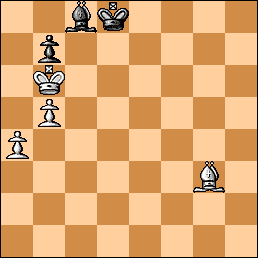
So after 32...Bd7 33.Kd2 Kg7 34.Kd3
34...Kf7. Perhaps 34...Bf5+ first, and after 35.Kd4, then 35...Kf7.

Now in the game White plays 35.Kd4 and I think now Black loses after 35...Ke6?, allowing 36.Kc5! and winning.


So instead of 35...Ke6, Black should play 35...c5+!.
The pawn cannot be ignored. If 36 bxc5, then 36...Bxa4 should draw.

If 36.Kxc5 Bxa4.
If White plays 37.Bb8, then 37...Ke6 looks OK.
If White plays 37.Kb6, then 37...Bc6 should hold for the draw.
If White plays 37.b5, then 37...Bb3 should draw.


Bill

Friday, October 7, 2011

A Not-so-Simple "Simple Endgame"


In the following game, both players seemed interested in reaching a simple Bishops-of-opposite-colors endgame. Apparently Black, a pawn down, assessed the position as drawn; while White believed that he could possibly out-play his opponent. Both of them were right. Except about the "simple" part.


mckenna215 - Knight32
Jerome Gambit Thematic Tournament
ChessWorld, 2011


30.Bxa7

At first glance, this move seems extravagant: White gives up his Kingside passed pawn in order to have a 3-to-2 edge in pawns on the Queenside. However, Black's King is well-placed to blockade the White h-pawn, should it ramain on the board. White's move simply changes the game from "drawn" to "really drawn".

But, don't go away.

30...Bxh3 31.b4 c6

Putting your pawns on the same colored squares as your Bishop is the basic drawing strategy.

32.c4 Bd7

After the game was over, Black might have asked himself why he did not simply start to run his King over to c8, and save himself some hassles. The text move does not upset the draw, it just makes it possible, some time in the future, for it to become more complicated.

33.Kd2 Kg7 34.Kd3 Kf7 35.Kd4


35...Ke6

Coming out to "confront" the enemy, Black's King wastes important tempos. After 35...Ke8 followed by 36...Kd8 and 37...Kc8, he could have protected his pawns and allowed his Bishop to move where it needed to.

36.Kc5 Bc8

37.b5

Routine play, reducing the 3-to-2 pawn majority to a 2-to-1 pawn majority. This is one step further toward producing a passed pawn, but that may not be the best goal to work toward, especially if White reaches a 1-to-0 pawn majority only to have Black sacrifice his Bishop for it.

The text ignoresWhite's winning plan: get his King to c7, where it chases away the Black Bishop and wins the b-pawn.

To accomplish this, White needs to advance his King, 37.Kb6, and then exhaust Black's extra tempos, eventually forcing the monarch away: 37...Kd7 38.c5 Kd8 39.Bb8 Kd7 40.a5 Kd8 41.Bg3! Kd7 42.Bh4 when Black's King must give up his protection of the c7 square and allow White's King to move in.

That is hard work, but that is what it sometimes takes to extract a full point from a "drawn" endgame.

37...cxb5 38.cxb5


The pawn structure foreshadows a draw. Imagine White's a-pawn advancing to a6, where it is captured by Black's b-pawn, and then White's b-pawn recaptures. Unless Black's Bishop can be kept off of both the a6-c8 diagonal and the a8-h1 diagonal, there will be nothing to stop it from capturing the remaining passer should it step on a light square.

Can White's King advance and scare off the Black Bishop? It can, but if Black's King can get around to White's pawns, then it can capture one of them while White is capturing Black's last pawn. Then, the Black Bishop will stop the remaining White pawn, as in the previous paragraph.

38...Kd7

Ouch! Black blocks his Bishop.

This is a good move if White plays 39.Kb6, as Black answers 39...Kd6. But what if White moves his Bishop?

39.Bb8 Ke6

It now looks like White's King can swoop in and execute the plan given in the notes to White's 37th move. But, no: the pawn exchanges have changed everything. White has to play 40.Bg3, holding onto the b8-h2 diagonal so that White's trip to the White pawns takes longer...

40.Kb6 Kd7

This is not an endgame, it is a commercial for a headache medication!

With 40...Kd5 Black would again have established a drawn position, even against the scary-looking 41.Kc7 Bg4 42.Kxb7, as 42...Kc5 puts the White King in place to grab one of the pawns, e.g. 43.Ka6 Kb4 44.a5 Be2, etc. One pawn will not be enough for White to win.

Now Black's King is again in the wrong place (and it blocks its Bishop, again, too).

41.Bg3 Kd8

42.a5

Having given his King and Bishop chances to  untangle the game, White now nominates one of his pawns.

42...Kd7

Instead, the tactical shot 42...Bd7 holds the draw, for all the old reasons, starting with 43.Kxb7 Bxb5.

43.Ka7

Yes!

43...Kd8

According to Houdini, the best defense is 43...Ke8, after which White has a mate in 87...

44.b6

Yes!

Not 44.Kb8 when 44...Bd7 is equal.

44...Kd7 45.Kb8 Kd8 46.Bf4 Kd7 47.Bc7 Black resigned


A smooth finish: Black's King will have to move, abandoning his Bishop and pawn.

Thank you, mckenna215 and Knight32 for a very educational game! 

Thursday, October 6, 2011

Staring It Down


In the following game White plays 6.d4 and is immediately hit with the strongest reply, 6...Qh4. Time to panic? Hardly. Simply time to stare the defender right in the eye and ask him: Okay, that's one good move, do you know what comes next?? 


Darthnik - aufdermaur
blitz, FICS, 2011

1.e4 e5 2.Bc4 Nc6 3.Nf3 Bc5 4.Bxf7+


4...Kxf7 5.Nxe5+ Nxe5 6.d4 Qh4


A full-bore response to White's center play. For recent comments, see "Deus Ex Machina" and "Danger? He Laughs At Danger".

7.0-0 Ng4

Black has mate on his mind, and directs his pieces accordingly. 

8.h3 Bd6

Consistent, but 8...Bb6, as in Sir Osis of the Liver - perrypawnpusher, JG3 thematic, ChessWorld, 2008 (0-1, 38) and Wall,B - Rajiv, Chess.com, 2010 (1-0, 33) was probably stronger.

9.e5 Nxe5

Black decides to return a piece for two pawns, to keep the initiative. This may be a slight improvement upon the similarly intentioned 9...Bxe5 which was played in the earliest (to The Database's knowledge) 6...Qh4 game, Sorensen,S - X, Denmark,  1888, (1-0, 27).

Perhaps the patient 9...Be7 was better, still.

10.dxe5 Bxe5


11.f4

A very understandable move from a psychological perspective: White's King has been facing a three-piece onslaught in which Black was comfortable enough to burn one of his own pieces (why not, he still has an extra one) to keep things going. This feels unfair, as White chose the Jerome Gambit to have an attack on Black's King, not the other way around.

White's move blunts the impact of the Bishop, but he had more to expect from 11.Qd5+ putting the focus back on the Black monarch. If Black does not want to simply give a second piece back then he has to try 11...Kf6.

The equalizer for White, then, would be 12.Nd2, intending Ne4+, kicking the protection away from Black's Bishop. Simple development for Black, like 12...Ne7, would even allow the fork trick 13.Qxe5+ Kxe5 14.Nf3+ followed by 15.Nxh4 and material equality. Hanging onto the Bishop for dear life with 12...Qd4, instead, would lead to complications after 13.Qf3+ Ke7 14.Re1, but, again, White will recover his sacrificed piece.
White works this all out a move too late.

11...Bd6 12.Qd5+ Kf8 13.Nd2 Nf6


Now White has to work his attack up all over again. He can be satisfied that Black's "attacking" Bishop has become his "blocking" Bishop, as in blocking Black's own development.

14.Qd3 b6 15.Ne4 Bb7 16.Nxd6 cxd6 17.Qxd6+ Kf7 18.Qd3 Rhe8 19.Bd2 Kg8

The theme looks like it is about to change. Black has castled-by-hand and can look toward attacking White's King again (with an extra piece).

20.f5 Nh5 21.Bc3 Nf4

Aggressive, sure, but overlooking White's counter.

22.Qc4+

This double attack wins back the sacrificed piece. More than that, it seems to distress Black, who again sees his Kingside attack dissolve.

22...Kh8

This move whispers "King safety" but it should have been replaced with 22...d5, since after 23.Qxf4 Qxf4 24.Rxf4 Black can still look toward the drawing chances of a possible Bishops-of-opposite-colors endgame.

Now White's attack roars on.

23.Rxf4 Qh6 24.Rg4 Rg8 25.f6


Thematic, but 25.Re1, planning Re7 with even more pressure on g7, was even stronger.

25...g6 26.f7+ Rg7 27.Qb4 d5 28.f8Q+ Rxf8 29.Qxf8 checkmate


And that, good Readers, is how Darthnik faced the refutation, looked right into its eyes, and stared it down...

Wednesday, October 5, 2011

Good players create their own "luck"


Lest yesterday's post ("Deus Ex Machina") give you the mistaken idea that Bill Wall relies on metaphysical assistance to score 95%+ with the Jerome Gambit, here is another game of his that is the triumph of hard work and ingenuity. 


Wall,B - GuestZCLK
blitz 10 0, FICS, 2011

1.e4 e5 2.Nf3 Nc6 3.Bc4 Bc5 4.Bxf7+


4...Kxf7 5.Nxe5+ Nxe5 6.Qh5+ Kf8


This is a very reasonable defense for Black. He keeps his King out of the crossfire and willingly gives back one of the two sacrificed pieces, confident that his remaining piece-for-two-pawns material advantage will be sufficient.

7.Qxe5 d6 8.Qg3 Qf6 9.0-0 Nh6 10.Nc3 Kf7


Black's development has kept pace with White's, and he is in the process of castling-by-hand. Yet, his advantage has slipped away, and White actually has the edge; which hardly seems fair at all. 

11.Nd5 Qd8

This is clear improvement over 11...Qg6 12.Qf4+ Ke6 13.Nxc7+ Black resigned, perrypawnpusher - recreation, blitz, FICS, 2010.

12.d4 Bb6 13.Bg5

It turns out that Black's King is not as safe as he would like it to be; that his Knight should have gone to e7 or f6 instead of h6; and that now his Queen is in danger as well and should probably take refuge with the unlikely 13...Qf8.

13...Qd7 14.Qf3+ Nf5 15.g4 Black resigned


It is true that instead of resigning Black can return his extra piece and eliminate White's center with 15...Bxd4 16.exf5, remaining only a pawn down; but he is dangerously behind in development and his dark-squared Bishop does not know where to find safety, even as White's Rook(s) eye the e-file...